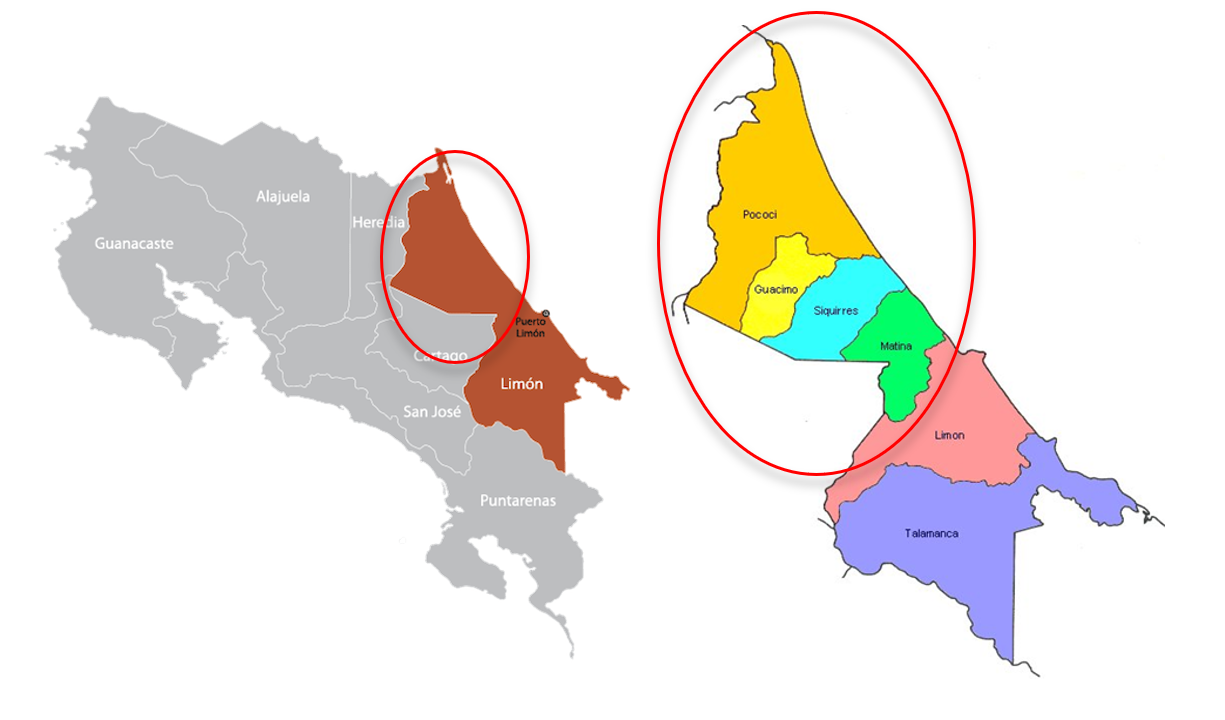
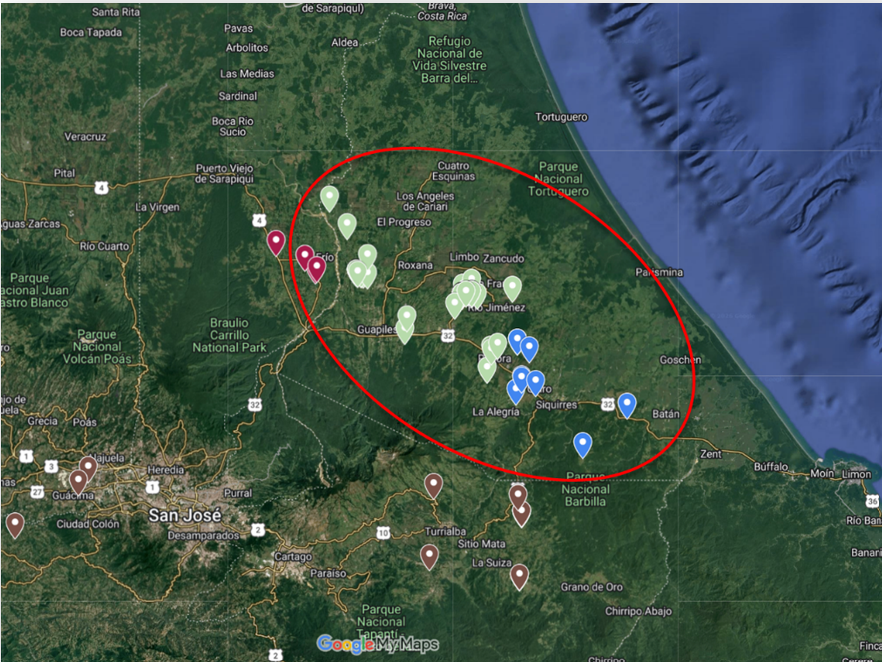
Together, these four cantons are responsible for 62% of all butterfly pupae exported by CRES, totaling approximately 382,000 pupae annually.

This concentration reflects decades of accumulated knowledge, favorable environmental conditions, and the early establishment of butterfly farming as a viable rural livelihood.

A Region Shaped by Opportunity and Transformation

Since the 1990s, this territory has hosted the steady growth of butterfly farming, supported by:

  • High humidity and warm temperatures, ideal for tropical butterfly species
  • Access to large tracts of land, historically available at relatively low cost
  • Land donations and settlement programs in the 1980s and 1990s that enabled family-based agriculture

These conditions allowed dozens of small and medium-scale farms to emerge, many of which remain active today.Currently, the region is home to more than 50 butterfly farms, operating at different scales and levels of specialization.

Butterfly Farming at Scale

The importance of this region becomes clear when examining production by canton:

Canton Name

Communities

Active Farms

Annual Pupae Volume (2025)
Pococí
3
19
114,000
Guácimo
5
23
168,000
Siquirres-Matina
5
7
100,000

This distributed model allows CRES to balance production risks, species diversity, and seasonal variation—while supporting dozens of rural families.

Growing Pressures and Emerging Risks

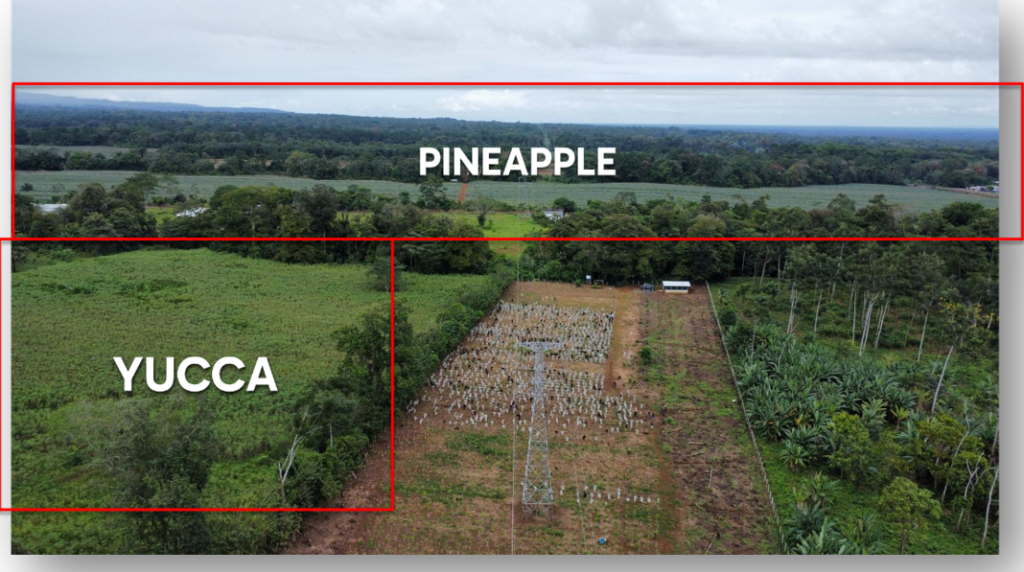
Despite its importance, the region faces mounting challenges. Surrounding forests have been rapidly converted into pineapple plantations, cattle pastures, and urban developments.

For butterfly farmers, this transformation introduces:

  • Increased exposure to aerial pesticide drift
  • Habitat fragmentation affecting wild butterfly populations
  • Reduced availability of clean buffer zones around farms

These pressures represent one of the most significant threats to the long-term sustainability of butterfly farming in the Caribbean lowlands.

Why this region still matters...

The Pococí–Guácimo–Siquirres–Matina corridor represents more than production volume. It is a living example of how biodiversity-based livelihoods can persist, even in landscapes dominated by industrial agriculture—provided that adaptation, monitoring, and collaboration continue.

For the CRES Immersion Program, this region illustrates both the strengths and vulnerabilities of Costa Rica’s butterfly farming model.

Share this post

Related posts